



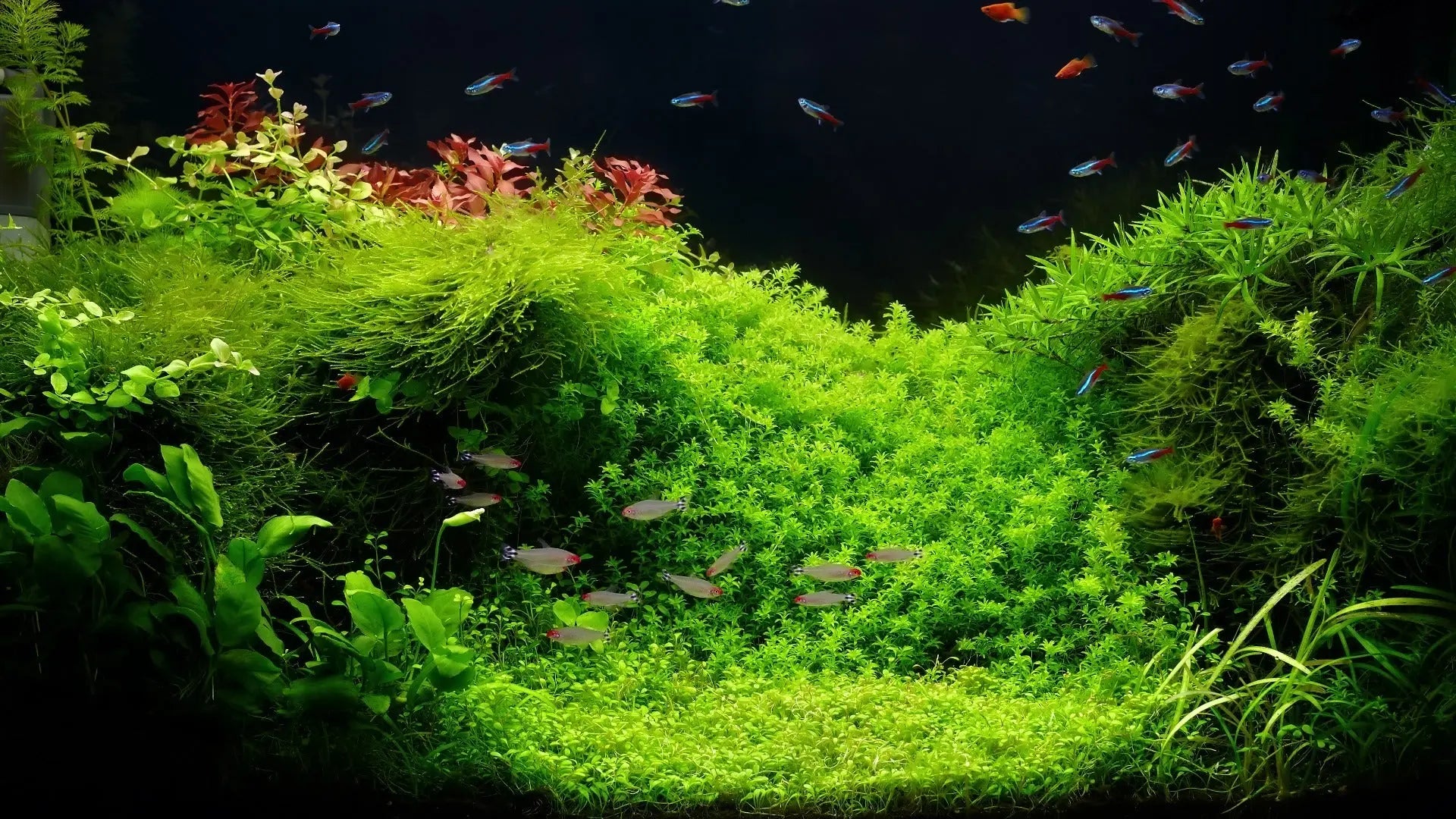
Keeping algae under control is one of the biggest challenges in maintaining a beautiful planted aquarium. While some algae are natural and even beneficial in small amounts, too much can quickly cloud the glass, smother plants, and disrupt the tank’s balance. Fortunately, the right algae eaters — both fish and invertebrates — can help maintain a healthy, pristine aquascape with minimal effort.
Let’s take a look at some of the best options to help you keep your aquarium algae-free and sparkling.
Otocinclus Catfish – The Tiny Tank Workhorses
If you have a smaller planted aquarium, the Otocinclus catfish (often called “Oto cats”) is an ideal choice. Reaching a maximum size of about 2 inches, these peaceful little fish thrive in tanks as small as 10 gallons. They’re schooling fish, so aim to keep them in groups of at least three to six for comfort and natural behavior.
Despite their size, Oto cats are powerhouse algae grazers, particularly effective at eating diatoms (brown algae) and soft green algae that often coat plants and glass. They do best in well-established tanks where natural algae are plentiful, but if food sources run low, you can supplement their diet with algae wafers or blanched vegetables like zucchini.
Siamese Algae Eater – The Versatile Cleaner
For larger aquariums (30 gallons or more), the Siamese algae eater is a fantastic all-around cleaning machine. Growing up to 6 inches, these active and hardy fish are famous for consuming a wide range of algae types — including the notoriously stubborn Black Beard Algae (BBA).
In addition to algae, Siamese algae eaters will scavenge leftover fish food and debris, helping reduce waste buildup in the substrate. They are best kept in groups when space allows, and their peaceful nature makes them a good fit for community tanks.
Bristlenose Pleco – The Compact Power Scrubber
Among the many species of Plecostomus, the Bristlenose Pleco is a favorite for planted aquariums due to its manageable size and impressive cleaning abilities. Typically growing to about 5–6 inches, Bristlenose Plecos can comfortably live in aquariums of 30 gallons or larger.
These nocturnal fish are omnivores, happily grazing on algae, uneaten fish food, and even sinking pellets. For optimal health, provide driftwood in the tank — they rasp on it as part of their digestion process, which helps keep their digestive system in good shape.
Cherry Shrimp – Small but Mighty
Don’t underestimate these colorful little crustaceans! Cherry shrimp are one of the most popular algae-eating invertebrates thanks to their beauty, variety of colors, and impressive cleaning skills. Growing to just 1.5 inches, they thrive in peaceful, planted aquariums with gentle filtration.
Cherry shrimp feed on soft green and brown algae, biofilm, and detritus. They’re available in a wide range of colors — including red, yellow, blue, and even striped varieties — adding both function and flair to your aquascape. However, because of their small size, avoid housing them with larger or aggressive fish, and cover filter intakes to prevent them from getting sucked in.
Amano Shrimp – The Ultimate Algae Eater
If you’re looking for a shrimp that works tirelessly to keep your tank spotless, the Amano shrimp is your go-to. Reaching about 2–2.5 inches in size, Amano shrimp are mostly transparent with a dotted pattern along their sides.
They’re voracious eaters that constantly graze on algae, leftover fish food, and decaying plant matter. Their appetite for various types of algae, including hair and film algae, makes them one of the most effective algae eaters available. Since they can’t survive long-term in freshwater without dietary support, be sure to supplement their diet with algae wafers and pellets.
Nerite Snails – The Perfect Finishing Touch
No planted aquarium cleanup crew is complete without the Nerite snail. These snails are incredible algae grazers and come in a variety of stunning shell patterns — from tiger stripes to zebra swirls.
Nerite snails feed on green and brown algae, diatoms, and soft film algae, keeping your glass and décor spotless. Best of all, they can’t reproduce in freshwater, so you don’t have to worry about an out-of-control snail population taking over your tank.
Final Thoughts: Building the Ideal Cleanup Crew
Each algae eater has its strengths, and often the best approach is a combination of species. For example, a few Otocinclus catfish, some Cherry or Amano shrimp, and a couple of Nerite snails can make a fantastic team in a planted community tank.
When selecting algae eaters, always consider:
-
Tank size and compatibility: Avoid overcrowding and ensure all species can coexist peacefully.
-
Food availability: Many algae eaters still need supplemental feeding to thrive.
-
Tank stability: Introduce algae eaters only after the aquarium is well-cycled and stable.
With the right mix of species and proper care, your planted aquarium will stay beautifully balanced — clear water, vibrant plants, and a natural ecosystem that practically takes care of itself.
Share:
Why Replacing Your RO/DI Filters Is Essential for a Healthy Aquarium
How to Choose and Use a Media Reactor Effectively in 2026